EduCareer

Lessons

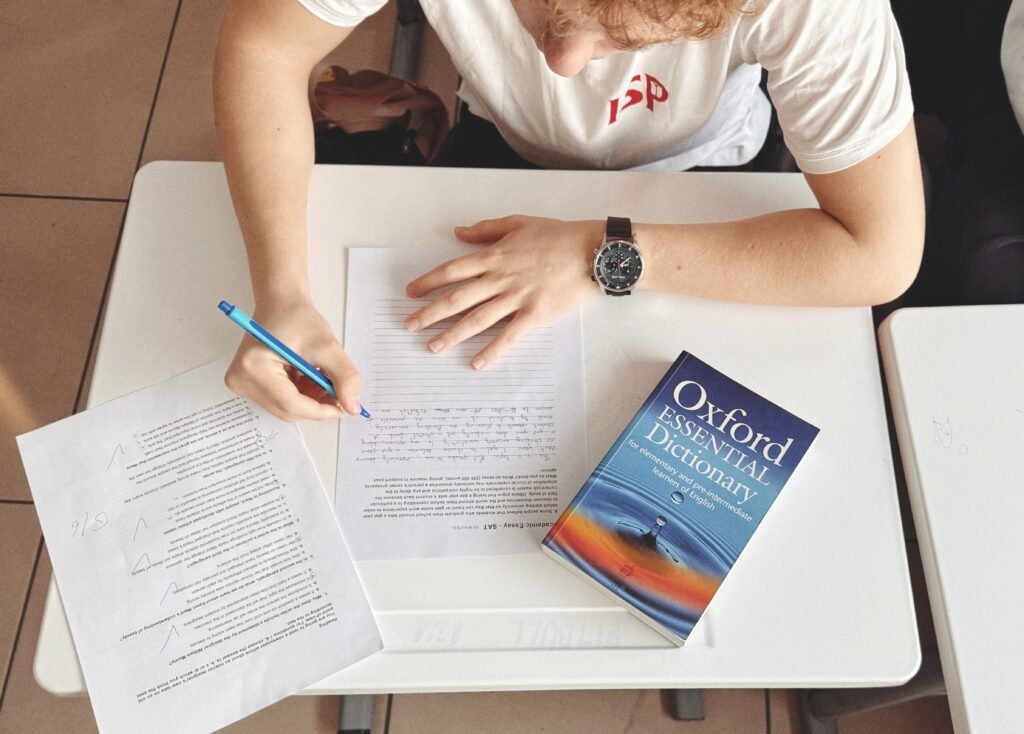
A student writing an academic essay with a dictionary - EduCareer Connect writing lesson

Describing People

Describing people is a key writing skill — for stories, introductions, and everyday descriptions. English uses different verbs for different kinds of description: be for states, have for features, and the present continuous for clothes someone is wearing. This lesson brings them together.

A student writing an academic essay with a dictionary - EduCareer Connect writing lesson

Writing About the Future: Will & Going To

To write about the future, English uses two main forms: be going to and will. Both talk about the future, but we choose them for slightly different reasons. This lesson shows you when to use each so your writing about plans and predictions is clear and natural.

A student writing an academic essay with a dictionary - EduCareer Connect writing lesson

Writing About the Past

The simple past tense is how we write about finished actions and events — things that happened and are now complete. It is essential for telling stories, describing your day, and writing about your experiences. This lesson covers regular and irregular verbs and how to build past sentences.

A student writing an academic essay with a dictionary - EduCareer Connect writing lesson

Subject-Verb Agreement

Subject-verb agreement means the verb must match its subject: a singular subject takes a singular verb, and a plural subject takes a plural verb. Getting this right makes your writing sound correct and clear. This lesson covers the rules and the tricky cases.

A student writing an academic essay with a dictionary - EduCareer Connect writing lesson

Present Continuous: Actions Happening Now

The present continuous (also called present progressive) describes actions happening right now, at this moment. We use it a lot when describing pictures, scenes, and what people are doing. It is formed with be (am/is/are) + verb + -ing.

A student writing an academic essay with a dictionary - EduCareer Connect writing lesson

Writing About the Present: Habits & Routines

The simple present tense is how we write about facts, habits, and routines — things that are generally true or happen regularly. It is the backbone of everyday writing: describing your daily life, your work, and how the world works. This lesson shows you how to use it correctly.

A student writing an academic essay with a dictionary - EduCareer Connect writing lesson

Filling In a Form

Filling in a form is a real-life writing skill you need for school, banks, travel, and jobs. Forms ask for your personal details in short answers — not full sentences. This lesson teaches the common form words and how to write your answers correctly.

A student writing an academic essay with a dictionary - EduCareer Connect writing lesson

Writing a Short Message or Note

A short message or note is one of the most common things you write in real life: a text to a friend, a note to a classmate, or a quick message to a teacher. At A1 level, you can write a clear, polite short message using a simple three-part structure. This lesson shows you how.

A student writing an academic essay with a dictionary - EduCareer Connect writing lesson

Connecting Ideas with And, But & Because

Good writing joins ideas together smoothly. The three most useful joining words at A1 level are and, but, and because. They turn short, choppy sentences into clear, connected writing. This lesson shows you exactly when and how to use each one.

A student writing an academic essay with a dictionary - EduCareer Connect writing lesson

Writing About Yourself

The most important A1 writing skill is being able to write about yourself: your name, age, nationality, job, and where you live. This is used on forms, in introductions, and in your first messages to new people. This lesson gives you the exact sentence patterns to do it.

Scroll to Top